There is one sentence that captures the difference perfectly: a chatbot answers questions. An AI agent completes tasks. It sounds like a small difference. It is not. For companies investing in AI, it is the difference between a nice gimmick and a measurable ROI. Between a digital FAQ and a digital employee. And most companies are still choosing the wrong option.
The Fundamental Difference#
Let us imagine a concrete scenario. A potential customer visits your website and types into the chat: "I am looking for a solution to automate my customer support."
What a chatbot does: "Thank you for your interest! We offer various solutions for customer support. Visit our page at studiomeyer.io/services for more information, or leave your email address so we can contact you."
What an AI agent does: It recognizes the purchase intent, asks about industry and current support volume, determines budget and timeline, creates a tailored conversation protocol, enters the lead with all details into the CRM, sends a personalized email with relevant case studies, and automatically schedules an appointment with the sales team for the next day.
Same input channel. Same starting point. Completely different outcome.
The Comparison Table: Chatbot vs. AI Agent#
Let us examine the differences systematically:
Reactive Versus Proactive#
- Chatbot: Waits for a question and gives an answer. Reacts but never acts on its own.
- AI Agent: Recognizes patterns and acts proactively. If a visitor views the pricing page three times without submitting an inquiry, the agent starts a conversation: "Can I help you choose the right package?"
Single-Turn Versus Multi-Step#
- Chatbot: Each interaction is self-contained. Question in, answer out. No connection between conversations.
- AI Agent: Executes multi-step processes. A customer inquiry can trigger a chain of ten actions spanning hours or days -- follow-up emails, CRM updates, appointment scheduling, document generation.
Q&A Versus Task Completion#
- Chatbot: Delivers information. "Our business hours are Monday to Friday, 9 AM to 5 PM."
- AI Agent: Completes tasks. "I have scheduled your appointment for Wednesday at 2 PM, sent a confirmation email, and informed the responsible advisor."
Static Versus Learning#
- Chatbot: Works tomorrow the same way as today. Only improves when a developer manually updates it.
- AI Agent: Learns from every interaction. Recognizes which responses lead to satisfied customers and optimizes continuously.
Single-Channel Versus Omnichannel#
- Chatbot: Typically lives as a widget on the website. Sometimes also on WhatsApp or Facebook, but as a separate system.
- AI Agent: Works across channels with a single knowledge base. Website, WhatsApp, email, Instagram, Telegram -- the same intelligence, the same context, everywhere.
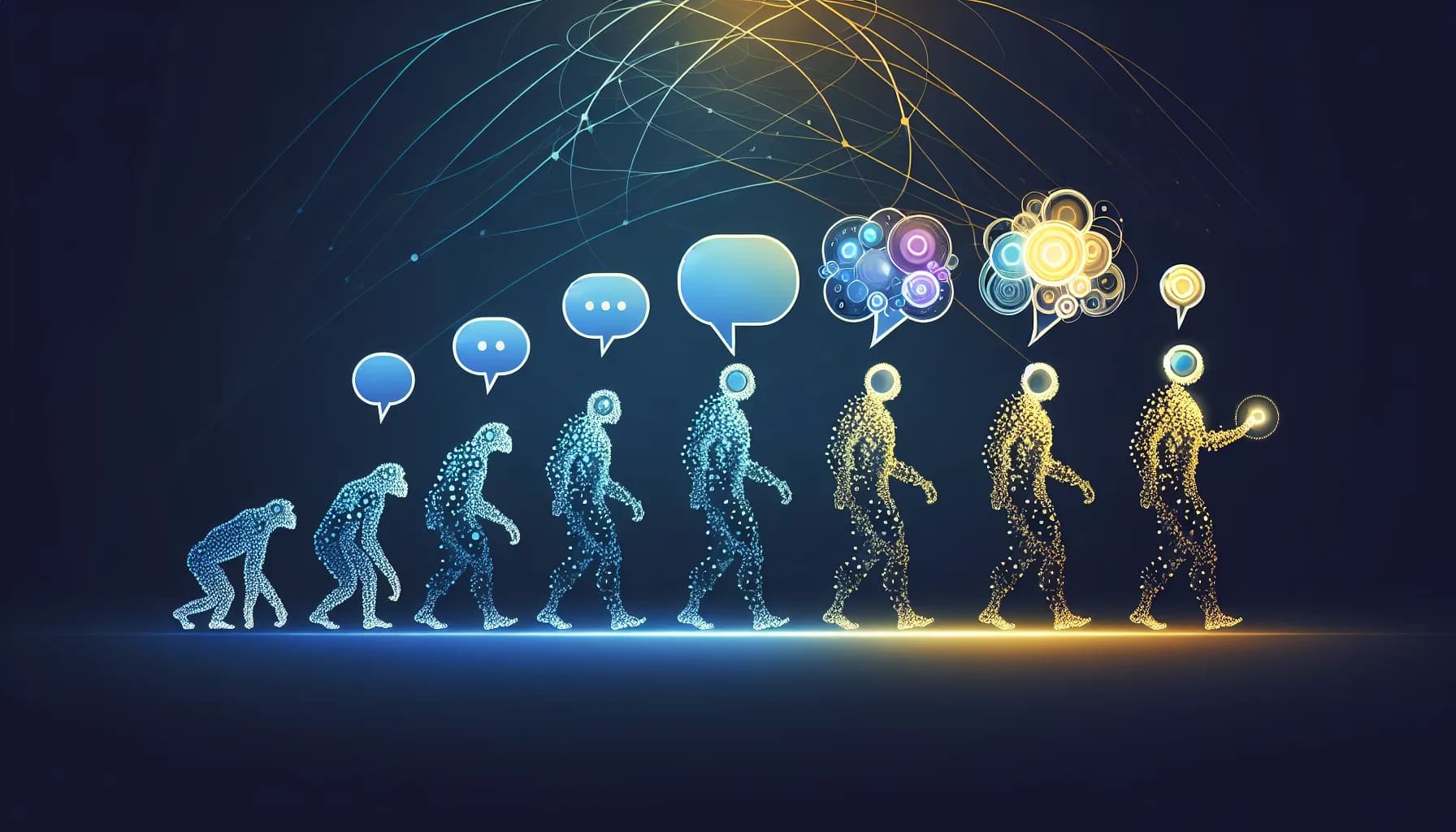
The Evolution: From FAQ Bot to Digital Employee#
The development from chatbots to AI agents is not a revolution but an evolution. Here are the key milestones:
2016-2019: The first chatbot wave. Rule-based bots on websites. "Hi, how can I help?" Mostly frustrating because they understood almost nothing. High abandonment rates, low utility.
2020-2022: NLP-based chatbots. Natural Language Processing made chatbots significantly better at understanding natural language. They could recognize intent and respond contextually. Still: reactive and limited to question-answer patterns.
2023-2024: LLM-based assistants. Large language models like GPT-4 and Claude made chatbots more versatile. They could answer complex questions and generate creative responses. But they remained passive tools.
2025-2026: Agentic AI. The paradigm shift. AI systems that act independently, use tools, complete multi-step tasks, and learn along the way. No longer chat interfaces, but digital workers.
When a Chatbot Is Enough#
Honesty: not every company needs an AI agent. In some situations, a solid chatbot is the better choice:
FAQ answering: If 80 percent of inquiries consist of the same 50 questions (business hours, prices, delivery times, return policies), a well-trained chatbot is perfectly sufficient.
Simple routing: If the chatbot only needs to identify the right contact person and forward the inquiry, you do not need a full agent.
Information delivery: Searching product catalogs, performing simple calculations, delivering standard information -- that is classic chatbot territory.
Very low inquiry volumes: With fewer than 50 inquiries per day, the complexity of an AI agent often is not worth it. A chatbot gets the job done.
When You Need an AI Agent#
The situation changes fundamentally when the following conditions apply:
Tasks instead of questions: When customers do not just want information but want things done -- booking appointments, changing orders, receiving quotes, initiating returns.
Multi-step processes: When a customer inquiry touches multiple systems -- CRM update, email dispatch, calendar integration, document creation.
Proactive sales: When you want to not just react to inquiries but actively qualify leads, plan follow-ups, and drive opportunities forward.
Scaling needs: When your team is too small for the inquiry volume, but interaction quality must not drop.
Omnichannel requirements: When your customers communicate via WhatsApp, email, website chat, and social media and expect the same experience everywhere.
Cost-Benefit by Complexity Level#
The investment decision depends on the complexity of your requirements:
Level 1: Simple FAQ Chatbot#
- Cost: 50 to 200 euros per month
- ROI: Reduces simple support inquiries by 40 to 60 percent
- Suitable for: Small businesses with simple, recurring questions
- Payback: 1 to 3 months
Level 2: Intelligent Chatbot with NLP#
- Cost: 200 to 500 euros per month
- ROI: Reduces support inquiries by 60 to 75 percent, improves customer satisfaction
- Suitable for: Mid-sized companies with moderate inquiry volume
- Payback: 2 to 4 months
Level 3: AI Agent with Tool Integration#
- Cost: in the low hundreds per month up to 2,000 euros for enterprise solutions
- ROI: Takes over complete tasks, actively generates leads, increases conversion by 20 to 40 percent
- Suitable for: Companies with complex processes and scaling needs
- Payback: 1 to 3 months (through direct revenue impact)
Level 4: Multi-Agent System#
- Cost: From 2,000 euros per month
- ROI: Transforms entire departments, automates end-to-end processes
- Suitable for: Larger companies with high automation maturity
- Payback: 3 to 6 months
The Migration Path: From Chatbot to Agent#
The good news: you do not need to make the full leap to Agentic AI immediately. The most sensible approach is incremental:
Phase 1: Establish a chatbot. Start with a solid FAQ chatbot. Collect data on the most common inquiries, identify patterns, and understand where customers drop off.
Phase 2: Expand the knowledge base. Feed the chatbot more company knowledge. Not just FAQs, but product details, process descriptions, pricing models. Use RAG technology for more precise answers.
Phase 3: First tool integrations. Connect the chatbot to your calendar (appointment booking), your CRM (lead capture), and your email system (automatic follow-ups). The chatbot is now slowly becoming an agent.
Phase 4: Proactive features. Enable proactive outreach based on user behavior. The agent no longer just reacts but acts. It qualifies leads, schedules appointments, and creates quotes.
Phase 5: Omnichannel rollout. Expand the agent to all communication channels. Website, WhatsApp, email, social media -- one agent, one knowledge base, all channels.
The Decision Matrix#
Answer these five questions to determine what you need:
- Does your AI only answer questions, or should it complete tasks? Only questions = chatbot. Tasks = agent.
- Do you need integration with other systems (CRM, calendar, ERP)? No = chatbot is enough. Yes = agent needed.
- Should leads be actively qualified and followed up? No = chatbot. Yes = agent.
- Do your customers communicate across more than one channel? No = chatbot. Yes = agent with omnichannel.
- Do you want the AI to continuously improve without manual intervention? No = chatbot. Yes = agent with learning capability.
If you answered "agent" to three or more questions, investing in an AI agent is the logical next step.
The ROI Factor#
In the end, it comes down to numbers. A chatbot saves costs. An AI agent generates revenue.
The chatbot answers 200 questions per day and saves you half a support employee. That is approximately 2,000 euros in savings per month. Good.
The AI agent additionally qualifies 50 leads per week, of which 10 percent convert. With an average order value of 5,000 euros, that is 25,000 euros in additional revenue per month. Plus the support savings. That is the difference that determines your ROI.
StudioMeyer builds AI systems that make exactly this leap: from passive chatbot to active agent that completes tasks, qualifies leads, and supports your sales around the clock. GDPR-compliant, quoted per project, across all channels. Ready for the difference?
