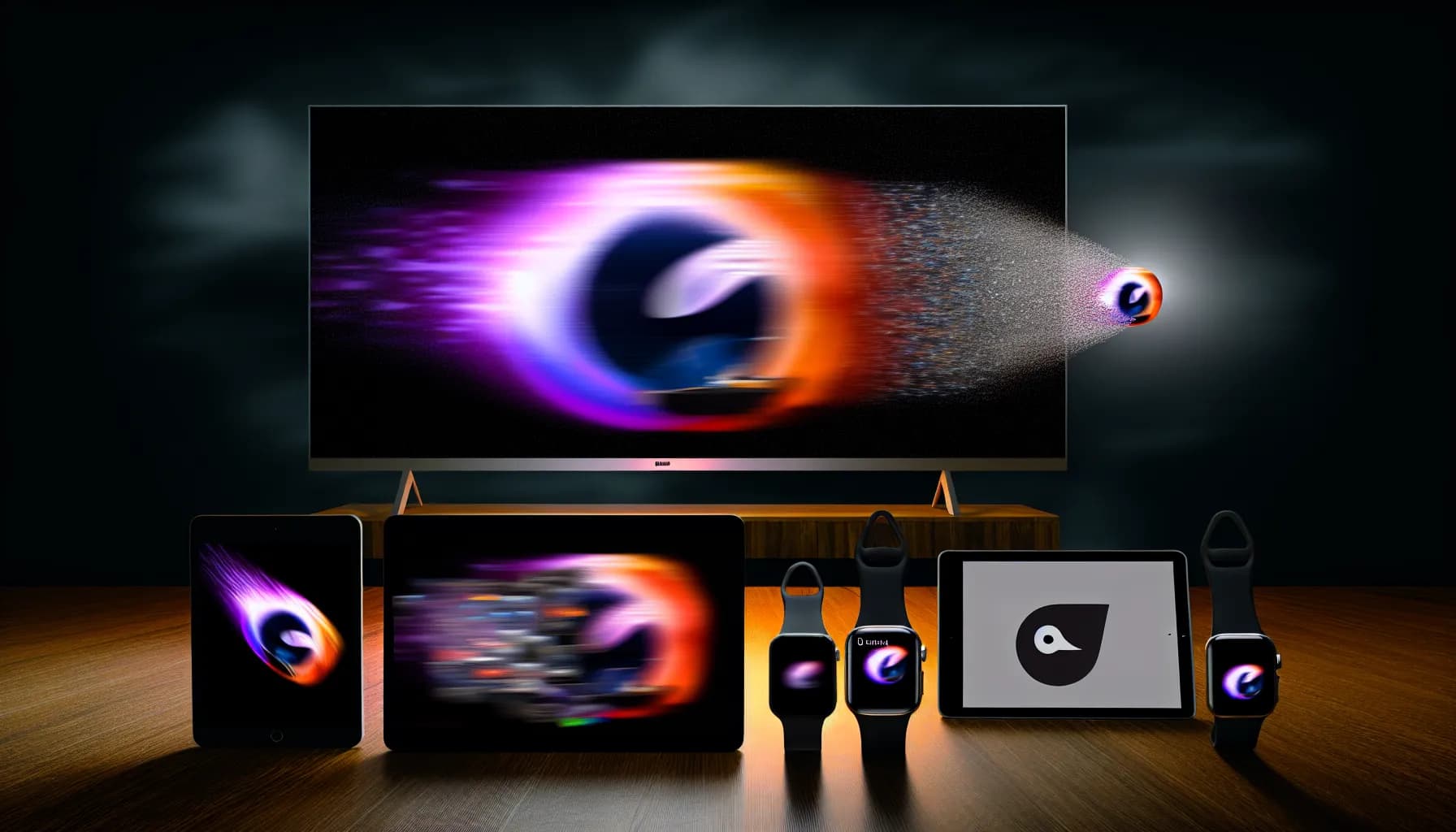
Brands used to be rigid. One logo, one color scheme, one rulebook — and it applied for decades. Those days are over. In a world where a brand must work simultaneously on a 4-inch smartphone, a 27-inch monitor, a smartwatch, in a dark mode interface, and as an animated element in a TikTok video, a static logo is no longer enough.
Dynamic Branding is the answer to this new reality. It describes a brand system that adapts based on context — in form, color, motion, and even sound. Not arbitrarily, but systematically. Not randomly, but within clearly defined rules.
From Rigid to Living: The Evolution of Brand Identity#
- Phase 1 — Static Identity (1950s-2000s): One logo, fixed colors, a style guide as PDF. Consistency meant rigidity
- Phase 2 — Responsive Identity (2010s-2020s): Logos provided in different versions. Adaptation was manual
- Phase 3 — Dynamic Branding (from 2024): The brand system itself becomes flexible through algorithms and generative systems
"The best branding doesn't feel identical — it feels related." Dynamic Branding doesn't mean your brand looks different every day. It means it works optimally in every context.
Why the Shift is Happening Now#
- The explosion of touchpoints. A brand now appears on an average of 14 different platforms and formats
- User experiences are personalized. When content is personalized, visual identity must respond
- Motion is standard. 73% of the top 100 websites use animated brand elements
Responsive Logos: More Than Just Scaling#
A well-thought-out responsive logo system typically includes four to six levels:
- Full Logo: Wordmark plus icon plus tagline — for large surfaces and print
- Compact Logo: Wordmark plus icon — for website headers
- Icon Logo: Just the icon — for app icons, favicons, and social media
- Micro Logo: Simplified icon — for smartwatches and small UI elements
- Animated Logo: Motion version — for loading screens and video intros
Google is the prime example. The full wordmark on the desktop homepage, the colorful "G" as app icon, and animated variations responding to searches and holidays.
Motion Branding: Movement as Brand Element#
Movement creates emotion, and emotion creates connection.
- Logo animations: How your logo appears communicates brand values
- Micro-interactions: How buttons and menus respond defines personality. Quick and snappy = technology. Soft and flowing = lifestyle
- Transition animations: How pages transition to one another
- Content animations: The choreography is part of brand language
Spotify masters Motion Branding with flowing color gradients, pulsing waveforms, and gentle transitions — everything feels musical, even without sound.
Easing Functions as Brand Signature#
The easing function of an animation can become a brand signature. Apple consistently uses a specific cubic-bezier curve. Google's Material Design uses a different one. These subtle differences add up to a distinct brand feel.
Generative Design Systems#
Generative branding creates variations of visual identity through algorithms. Designers define the rules; algorithms generate the variants.
- Variable backgrounds: Unique color combinations with each page load
- Generative patterns: Geometric patterns that vary but remain consistent
- Data-driven visualizations: Brand elements that react to real-time data
Melbourne's city branding is a classic: The "M" logo exists in countless generatively created variations, yet remains instantly recognizable.
Variable Typography#
Variable fonts aren't just a performance feature — they're a branding tool. Through variable axes (weight, width, slant), context-dependent variations can be created.
Adaptive Color Systems#
An adaptive color system defines primary and secondary palettes, generated gradations, dark mode mappings, and context rules for which combinations work in which situations.
Sonic Branding: The Auditory Dimension#
- Audio logo: A short, recognizable sound (Netflix, Intel, McDonald's)
- UI sounds: Click, notification, and success tones
- Brand voice: Tone and speaking style of voice interfaces
- Ambient sound: Background soundscapes for immersive experiences
AI-Generated Brand Variations#
AI is changing how brands are designed — not replacing designers, but as a tool for scaling. Applications include A/B testing design variants, personalized brand experiences, and automated asset creation.
How Small Businesses Can Implement Dynamic Branding#
Phase 1: Foundation ($2,000-5,000)#
Responsive logo variants, design token system, variable font.
Phase 2: Motion ($3,000-8,000)#
Logo animation, micro-interactions, transition effects.
Phase 3: System ($5,000-15,000)#
Living style guide, generative variations, adaptive color systems.
Phase 4: Intelligence ($10,000+)#
AI-powered asset generation, sonic branding, data-driven personalization.
Conclusion: Flexibility is the New Consistency#
Dynamic Branding isn't a passing trend. It's the logical consequence of a digital world where brands must function across hundreds of touchpoints.
Start with the foundation and build from there. The decisive question isn't whether your brand should become dynamic. The question is how quickly you begin.
At StudioMeyer, we combine strategic branding with technical excellence — from the first sketch to the implemented design token system.
